Only as many steps as necessary – fast, stable and precise! That’s what effective footwork looks like. In the video, we see Roger Federer performing one of the most difficult shots in tennis: the one-handed backhand topspin from a full run. It’s incredible how he stops his body, changes direction – without any unnecessary steps and while remaining completely balanced.
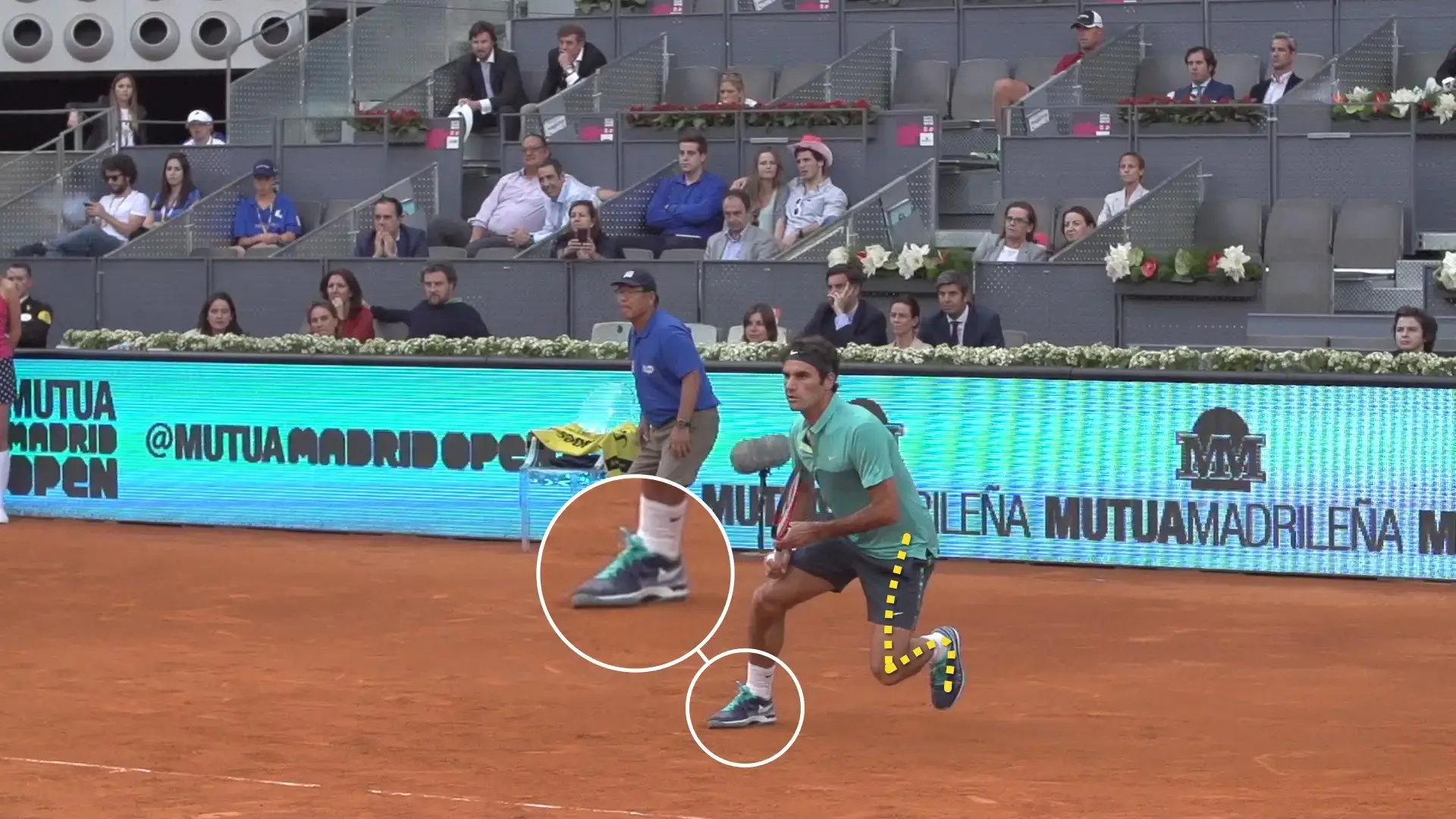
Roger has recognized where the ball will bounce and shifts his weight to his backhand side.
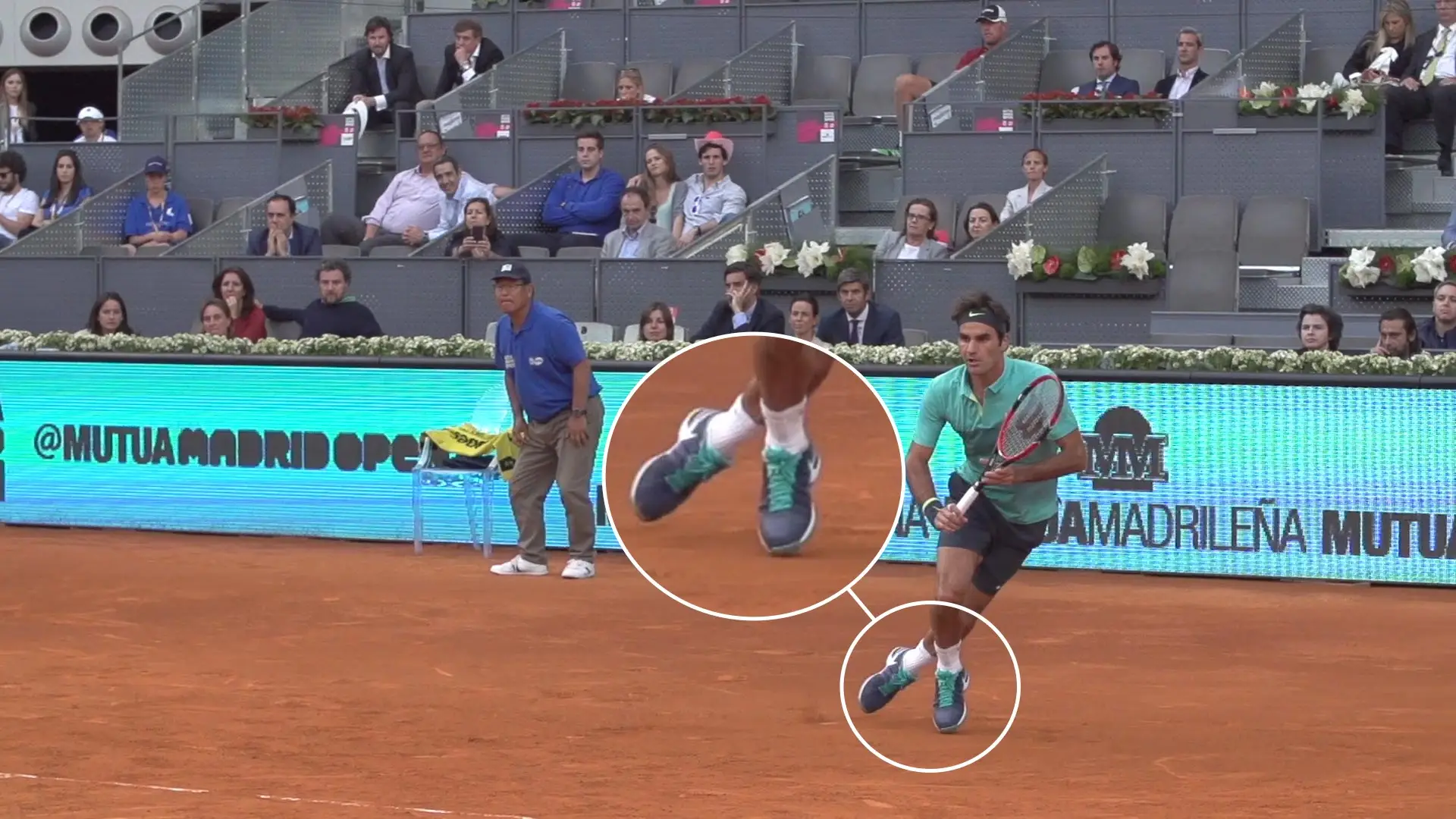
The front leg crosses over the back leg to quickly cover distance. The advantage: the upper body can still face forwards.
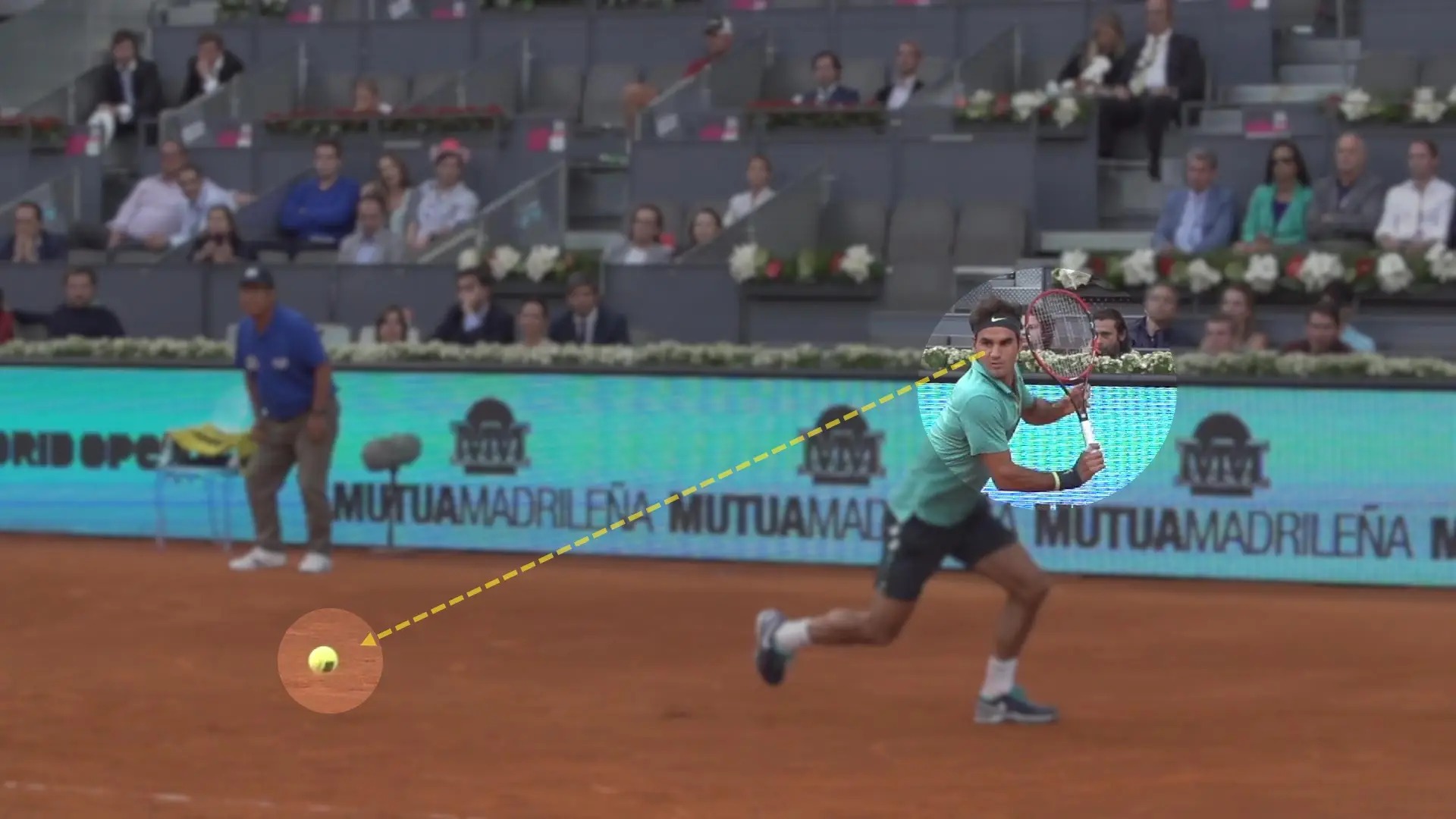
Now the upper body also turns and the racquet is raised. The eyes focus on the ball.
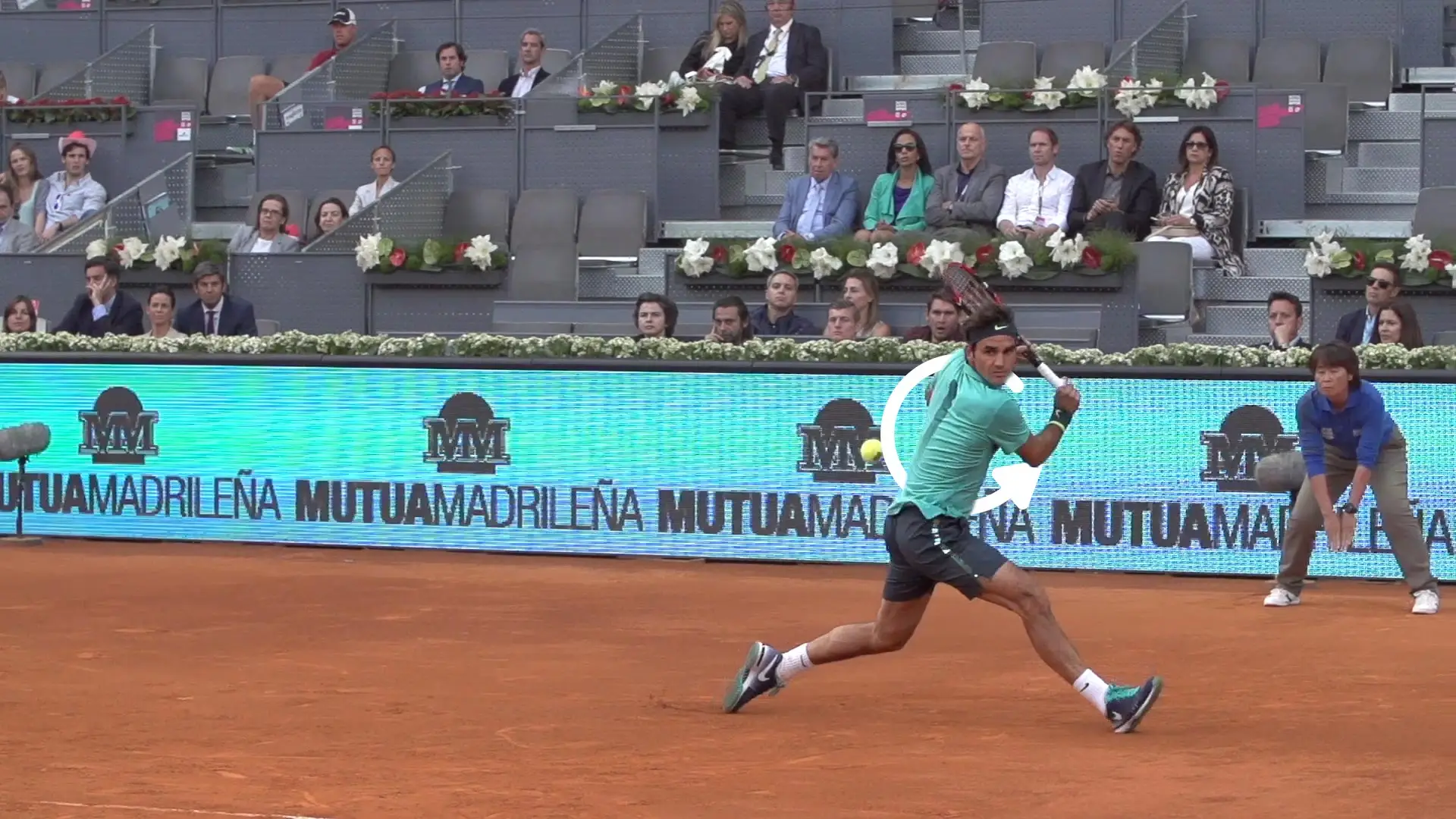
His upper body continues to turn backwards. He takes a very large step towards the ball.
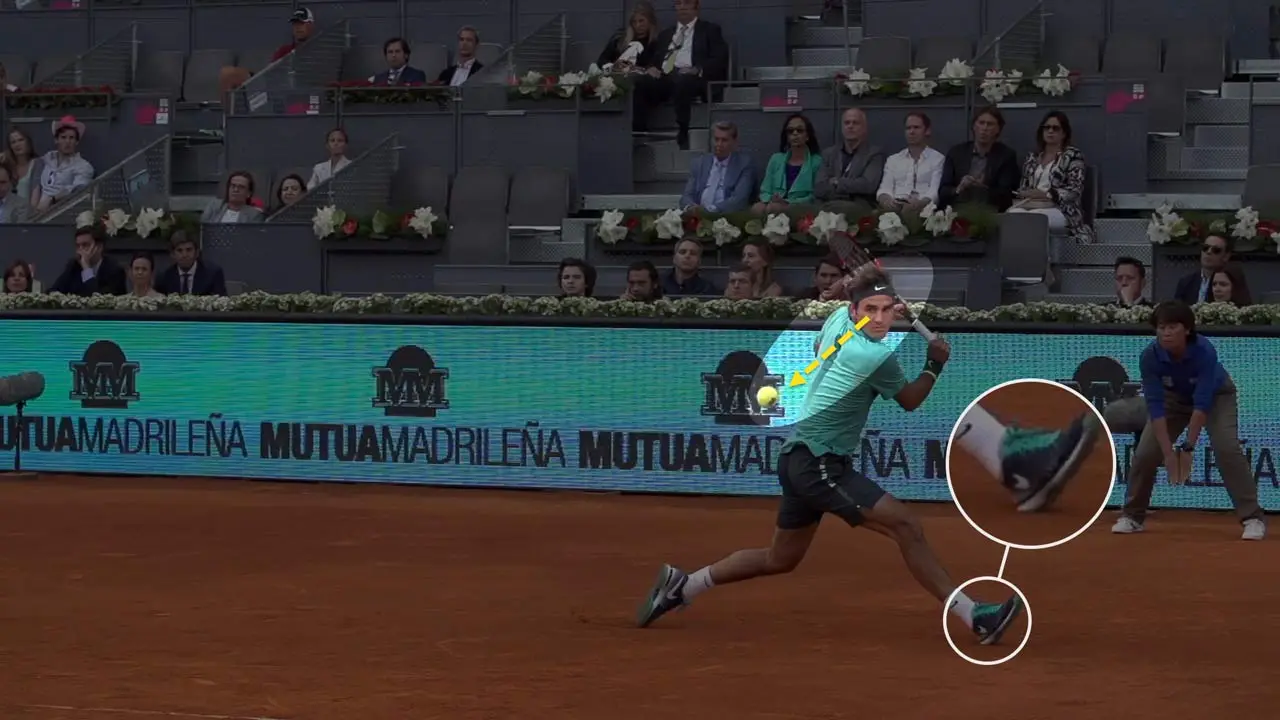
He puts his foot down with a so-called ‘heel strike’, meaning that his heel touches the ground first. This allows the large muscles (thighs and glutes) to be ‘loaded’ most effectively. His upper body rotates further backwards, but his gaze remains fully focused on the ball. This also requires a high degree of mobility in the thoracic spine (T-spine) region.
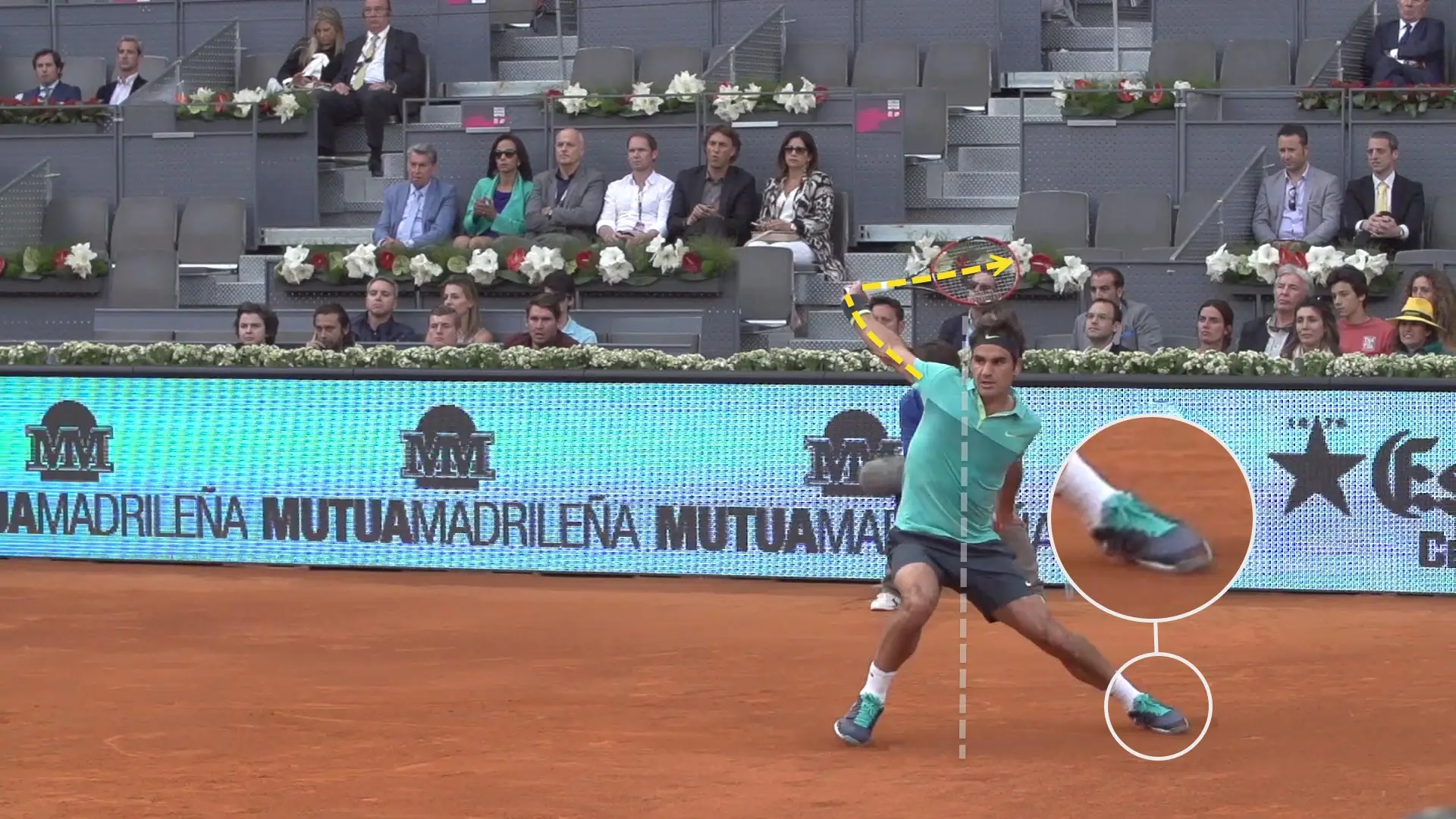
After the strike, he catches the body with his left leg. His head and upper body are aligned above the centre of his body. This gives him complete balance and stability.
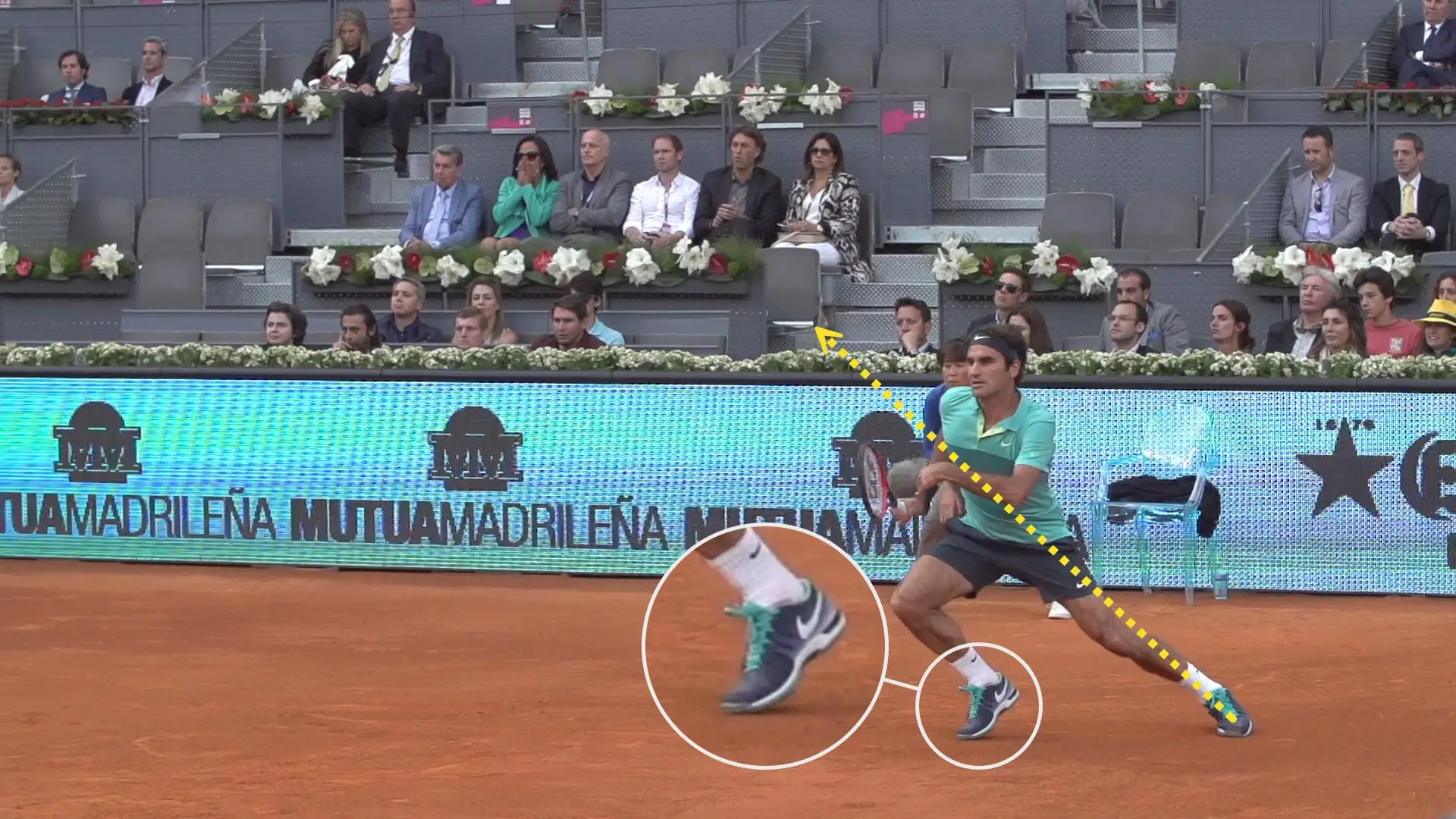
Without having to take any further additional steps, he explosively changes direction to cover the court again. In doing so, he lifts his right knee and places it on the tip of his foot (‘toe strike’). His body is shifted completely to the other side.
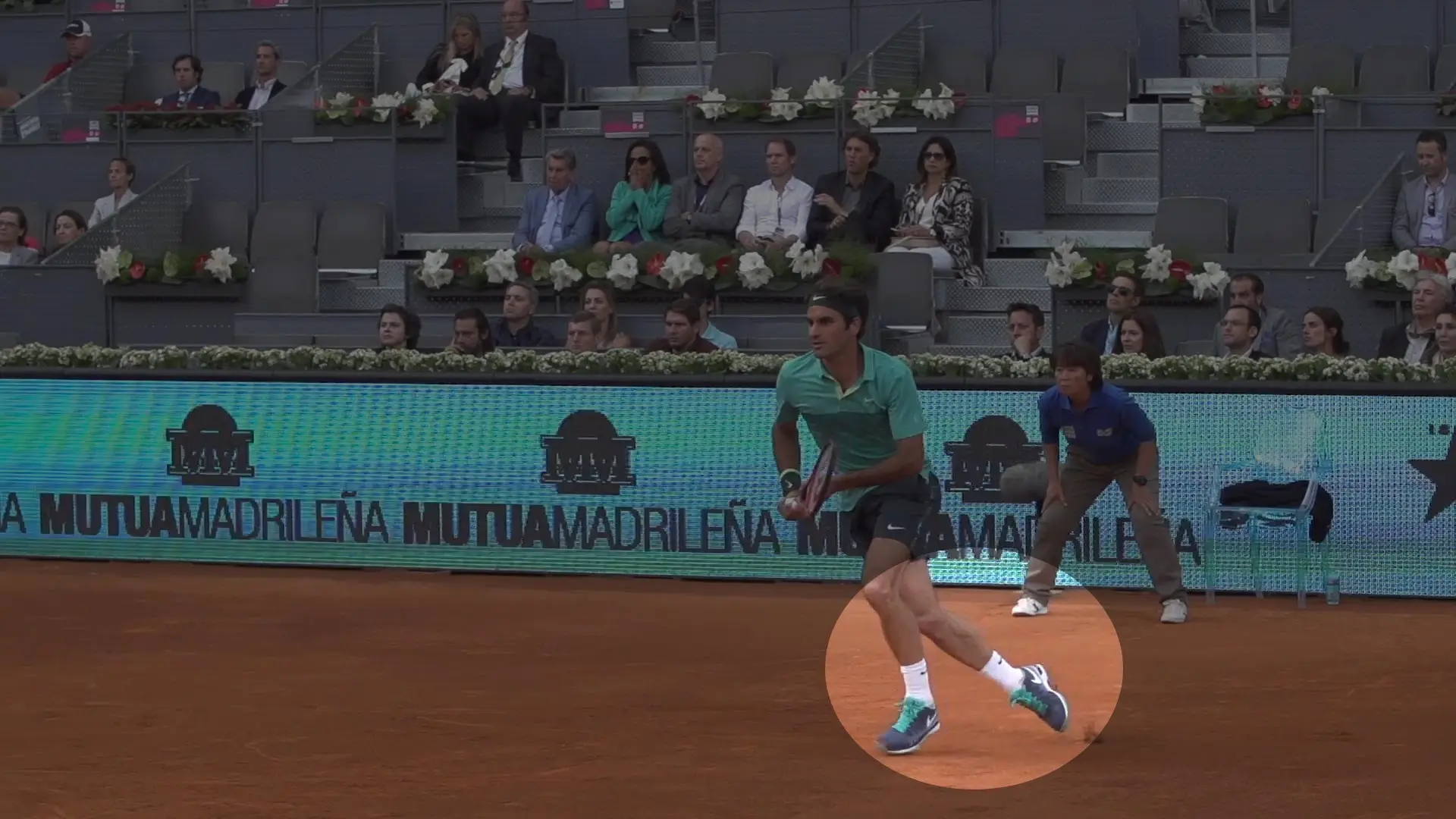
Crossing his legs at the front helps him to move quickly even with his upper body square. His head is straight and he has a clear view of the court and his opponent.
Coaching Keys
1. Movement Efficiency
- Use crossover steps to cover distance quickly
- Avoid unnecessary adjustment steps
- Keep upper body controlled during movement
2. Loading & Stability
- Initiate loading through a controlled heel strike
- Use large muscle groups (glutes & legs) for stability
- Maintain balance with head over center of mass
3. Recovery & Direction Change
- Stabilize immediately after contact
- Push explosively into the new direction
- Use toe strike for quick re-acceleration
Key Education Factor
The Key Education Factor combines efficient movement patterns with progressive loading and recovery mechanics.
Players learn to reduce unnecessary steps, stabilize dynamically, and connect movement seamlessly with stroke execution—resulting in higher consistency, better timing, and improved court coverage under pressure.
Progression by Playing Level
Playing Level 2
- Introduce crossover steps to cover distance efficiently
- Develop controlled stopping mechanics (balance after movement)
- Combine basic footwork patterns with simple stroke execution
Playing Level 3
- Develop dynamic crossover steps under time pressure
- Integrate loading mechanics (heel strike → rotational preparation)
- Improve stabilization and recovery directly after the shot
Playing Level 4
- Execute high-speed movement with minimal and precise steps
- Optimize the full movement chain: movement → load → contact → recovery
- Train reactive footwork in open, match-like situations with directional changes