WarmUp

Smarter Warm-Ups — Better Training Outputs

Search

Warm-Up Phase
General Warm-Up
Tennis-Specific Warm Up

Racket Switch – Improve team coordination in mini tennis

Racket change, slice and constant movement: this coordination warm-up improves ball feel, teamwork and anticipation in mini tennis.

Volley & Switch – improving coordination and communication in doubles

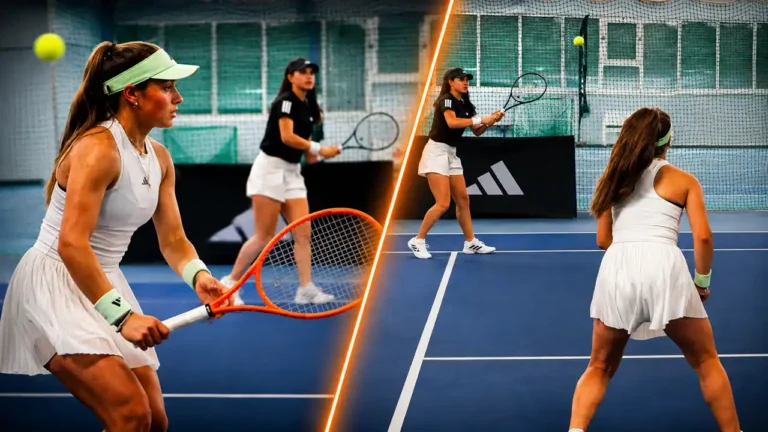
Improve volley control, communication, and doubles coordination with this dynamic warm-up exercise including regular side changes.

More intensity in the warm-up: put the ball down, pick the ball up, keep playing

Tennis-specific warm-up with an extra coordination task: the players hit down the line, put a ball down, keep playing, and pick it up again.

Playing cross precisely: targeting zones for more intensity

Improve precision, ball control, and consistency with a simple crosscourt exercise where changing target zones create new challenges.

Warm Up Strokes in mini tennis with a step over the line

Mini tennis exercise for active push-off, better court coverage, and controlled footwork after every stroke.

Quick Feet, Alert Mind: Tennis Warm-up with Shadowing

Active tennis warm-up with quick feet, shadow strokes, and a clear reaction to commands.

Control Stroke Overhead: Developing Volley Feel During Warm Up Strokes

Control stroke overhead: players train high volleys, quick high-low adjustments and greater confidence in net play.

More Than Just Lob and Smash: Game-Based Net Play Warm-Up

Game-based warm-up with overheads, volleys and return-like movements to improve footwork, reaction and coordination.

Medicine Ball 2 vs. 2

Intense medicine ball warm-up for footwork, rotation, reaction and tennis-specific transfer.

Mobility Flow for more reach and control in tennis

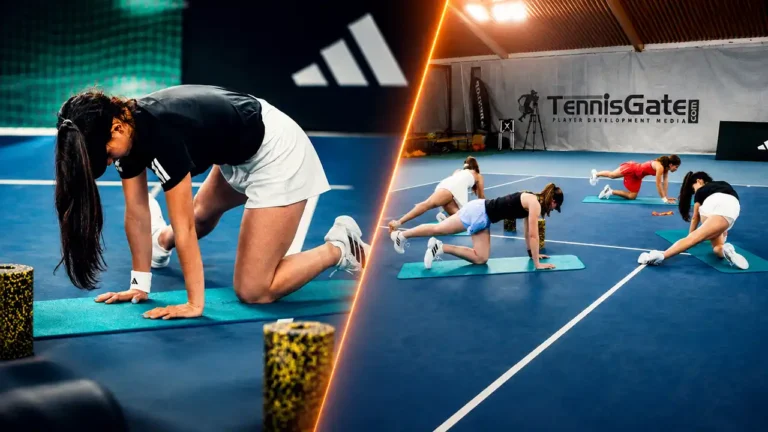
Active mobility in a half-kneeling position: mobilize hips, trunk and shoulder while building stability for tennis strokes at the same time.

Skater jumps with diagonal overhead coordination

Lateral jumps combined with overhead coordination: a challenging exercise for timing, stability, and dynamic control.

Skater jumps with controlled ball bounce

Lateral jumping power meets ball coordination: a simple but effective exercise for stability and balance.

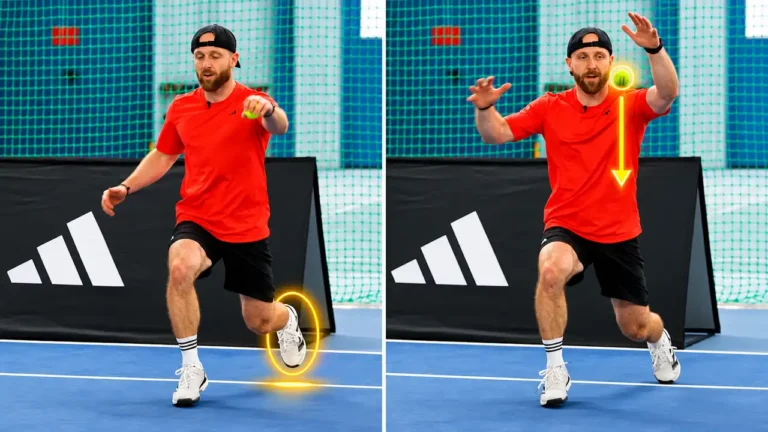
Drop–Catch Flow: Split-Step meets diagonal stability

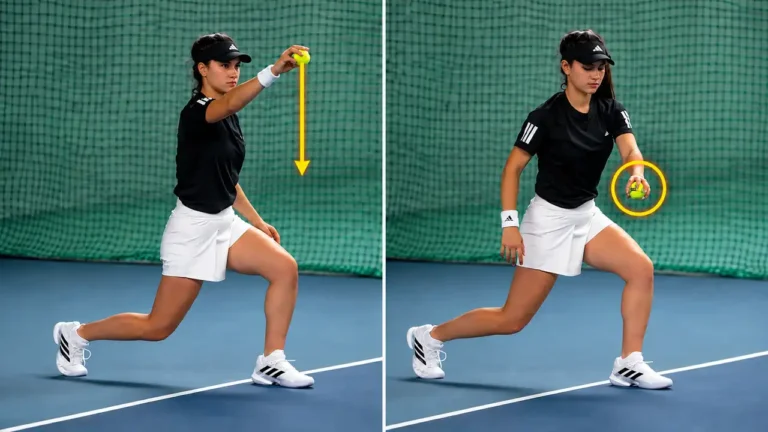
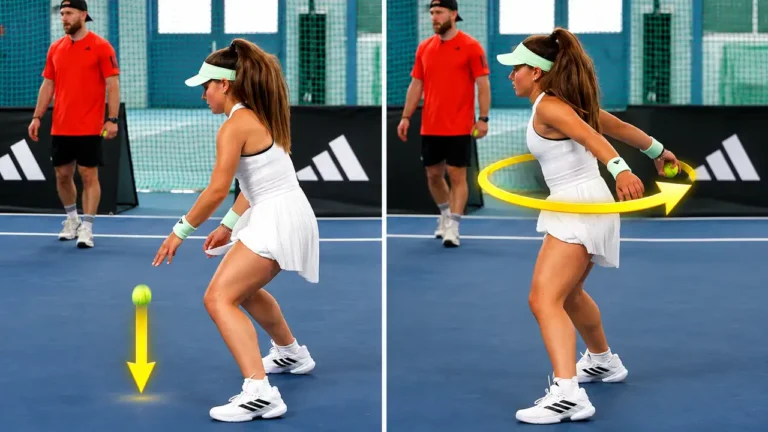
Split step meets diagonal catching motion: a drill for tracking, rhythm, stability, and explosive footwork.

Diagonal drop catch in a low stance

Diagonal catch in step position: tracking, reaction, and rhythm in one exercise.

Drop–Catch Flow: Visual tracking with knee bend control

The exercise combines visual perception, rhythm, diagonal movement patterns, and whole-body stability.

Eye-hand coordination with height changes – focus, rhythm, balance

The perfect warm-up for the court—train your focus, timing, and balance with the high-low ball drill!

One leg, one ball, full control – focus on visual stability

Coordination, focus, and balance in one movement—the one-leg challenge overhead.

Jump & Focus – Ball coordination with jumps

Ball coordination meets jumping power: Players train rhythm, visual focus, and spatial awareness in a playful way.

Drop balls straight down and catch them low in a cross-legged stance

Standing on one leg, drop two balls and catch them low and crosswise.

Drop balls crosswise and catch them low while standing on one leg

After releasing both balls at the same time, there is a quick reaction into a deep squat, whereby both balls are caught in a controlled ...

Throwing, kneeling, tapping, catching – in one fluid movement

The player stands upright and throws a ball straight upwards, well above head height. Immediately after the throw, the player tensions the opposite knee (e.g. ...

Drop balls crosswise and catch them low (neutral stance)

After releasing both balls at the same time, there is a quick reaction into a deep squat, whereby both balls are caught in a controlled ...

From one-legged stance to kneeling stance: counterbalanced full body control

From the one-legged stance on the right leg, the opposite left knee is pulled up and held diagonally forwards (approx. 45 degrees) in the air. ...

Mobility Flow: open the hips, stabilize the torso

In the one-legged stance, the knee is first pulled up with both hands and then rotated backwards and upwards in a free-floating, wide circular motion.
Scroll to Top