In this analysis, we superimposed the same player on a two-handed backhand in three age groups – 10, 11 and 13. Age-related differences can be clearly seen above all in upper body rotation and leg position. We strongly recommend that the players pay attention to the position of the standing leg and in particular to the position of the toes at an early stage. This detail is often overlooked. However, even at an early age it can not only limit performance, but can also trigger one or the other injury.
Analysis

Preparation and Backswing
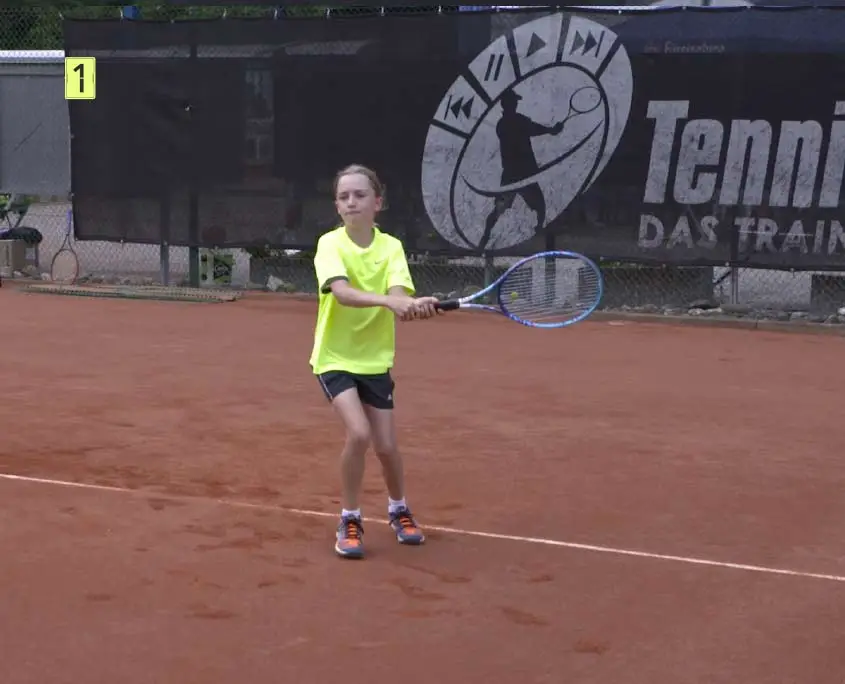
Age 10. In this phase of the backswing, 10-year-old Gina takes the racquet back almost horizontally. The upper body isn’t turned very well yet.
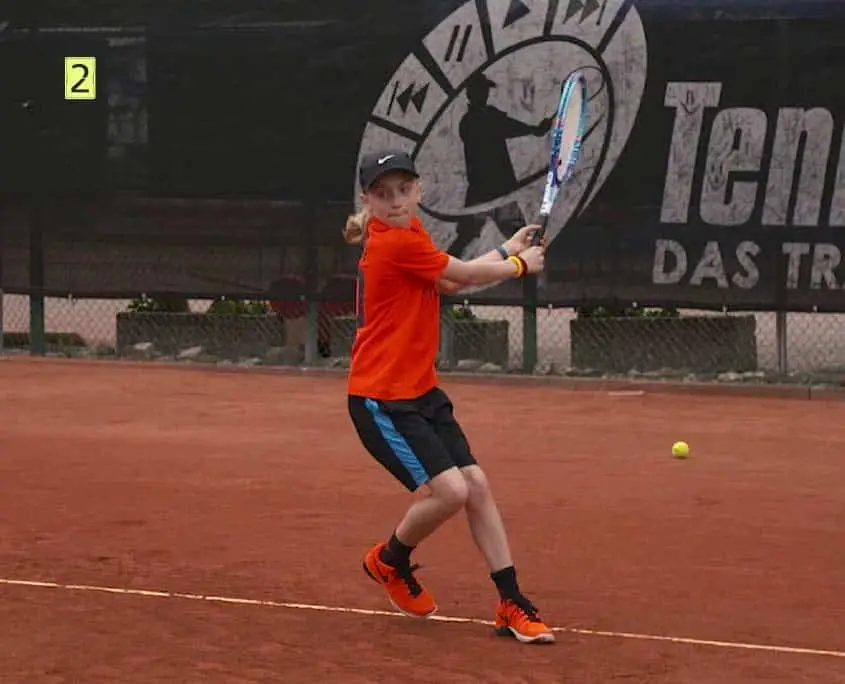
Age 11. One year later the upper body rotation and the extension of the arms are already a unit. This way the upper body is turned much better and the rear part of the shoulders points in the direction of the stroke. Compared to the previous year, the racquet starts higher into the backswing movement. What is noticeable is that the left hand does not hold the racquet grip firmly in this phase.
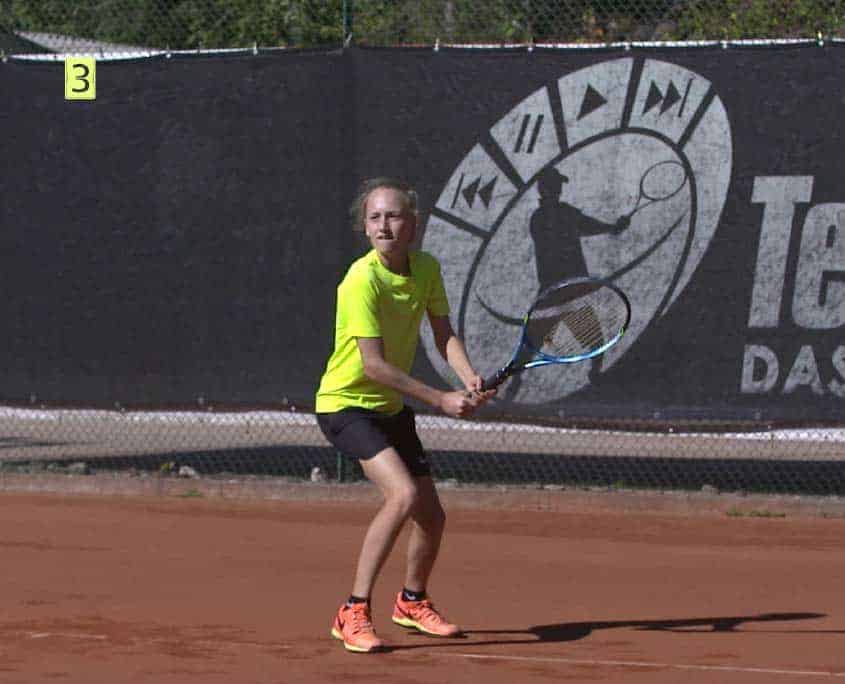
Age 13. At the age of 13, the backswing looks somewhat more compact from the start. The racquet is lifted slightly but does not go directly backwards. Thus the movement is a little later in time, but gives the player the possibility to adjust the movement if necessary and also to take the pre-tension of the forearm muscles fully into the stroke.
Backswing
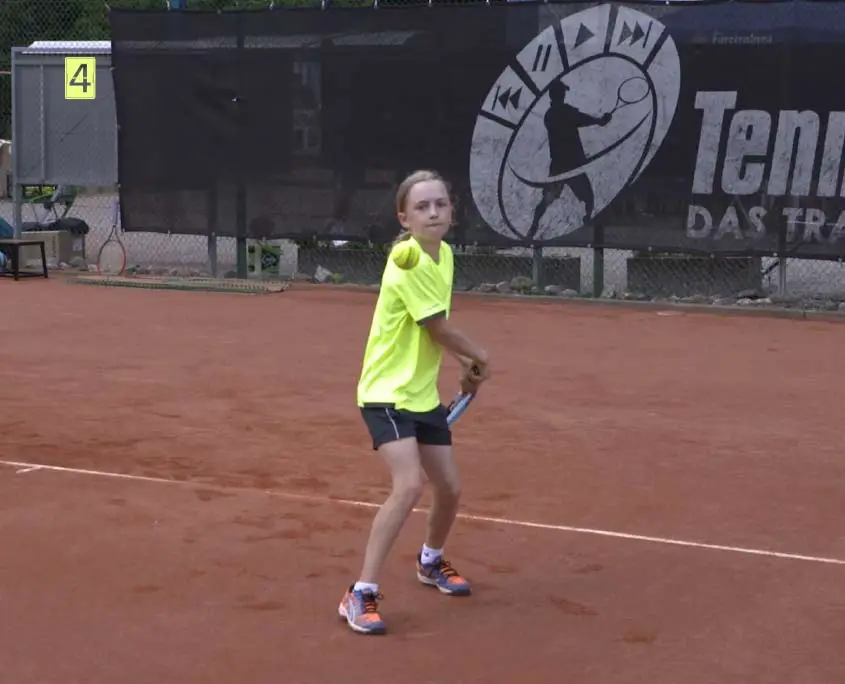
Age 10. In the reverse movement phase from the back to the front, the racquet head clearly comes to the ball from below. This is also shown by the fact that the racquet tip is positioned clearly below the wrists.
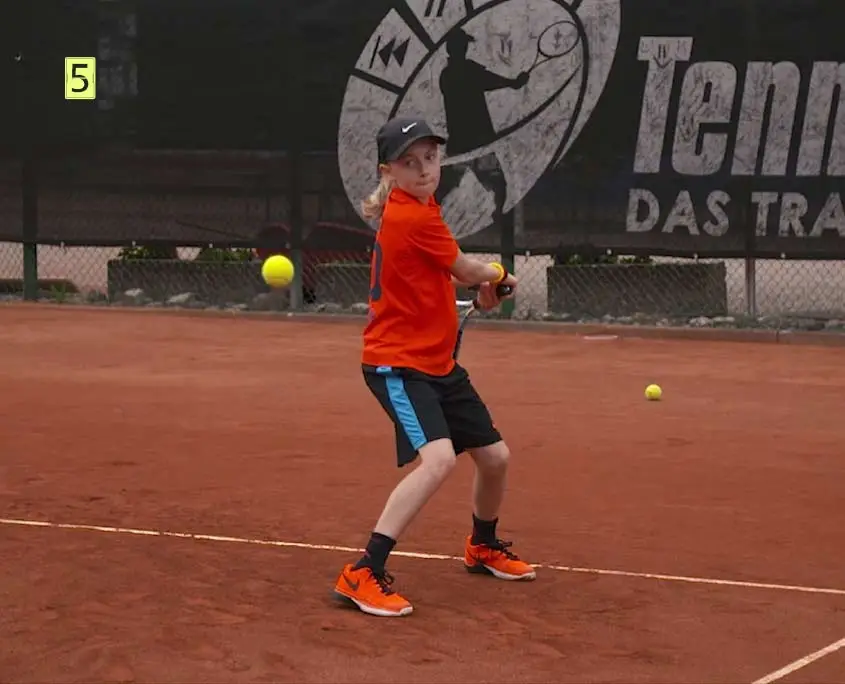
Age 11. Not too much difference a year later. As expected, the upper part of the body rotates slightly more backwards. You can already see a part of the back, but the front leg is quite parallel to the baseline, which is not optimal.
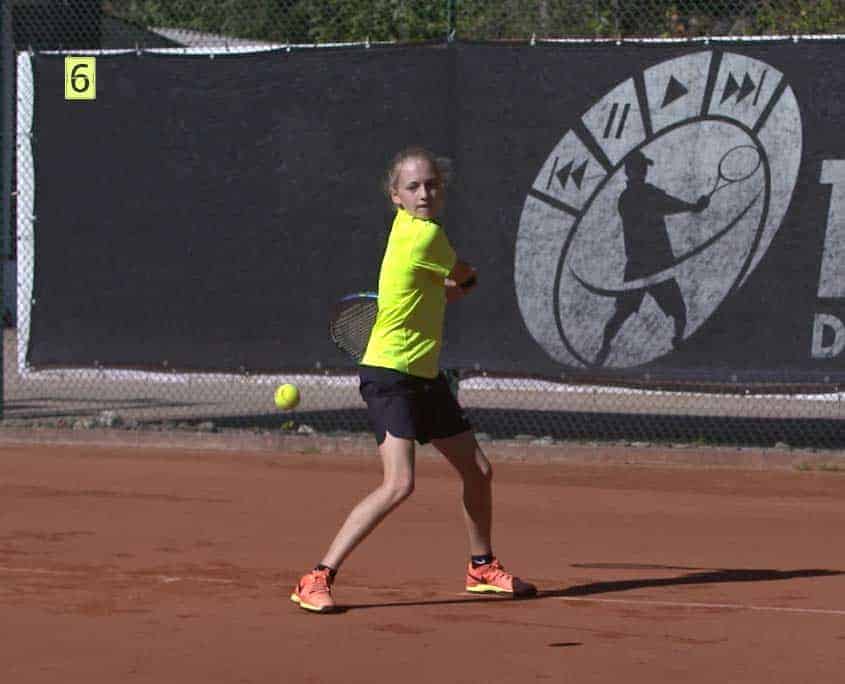
Age 13. Two years later you see the greater dynamism. The tip of the racquet points far behind the body, despite the slightly delayed backswing movement, as there is sufficient time to use the full range of the backswing. Upper body and shoulder girdle are now even better turned, the right foot tip points slightly forward, so also in this respect an improvement.
Forward Swing and Stroke Phase
The Core action: the contact point
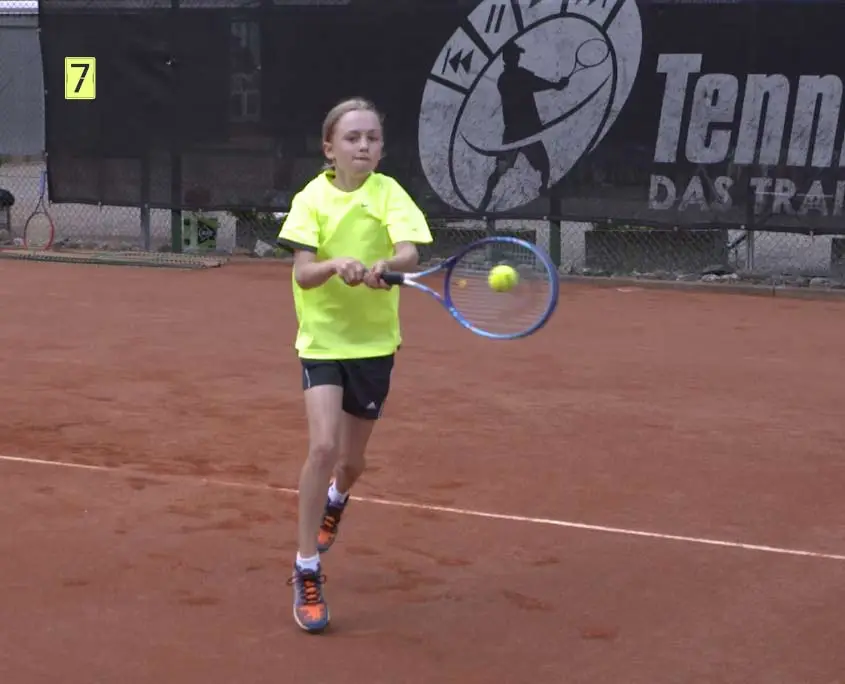
Age 10. No surprise is the clean contact point already at the age of 10 years. The front leg is on the tip of the foot, the back leg begins to swing backwards away.
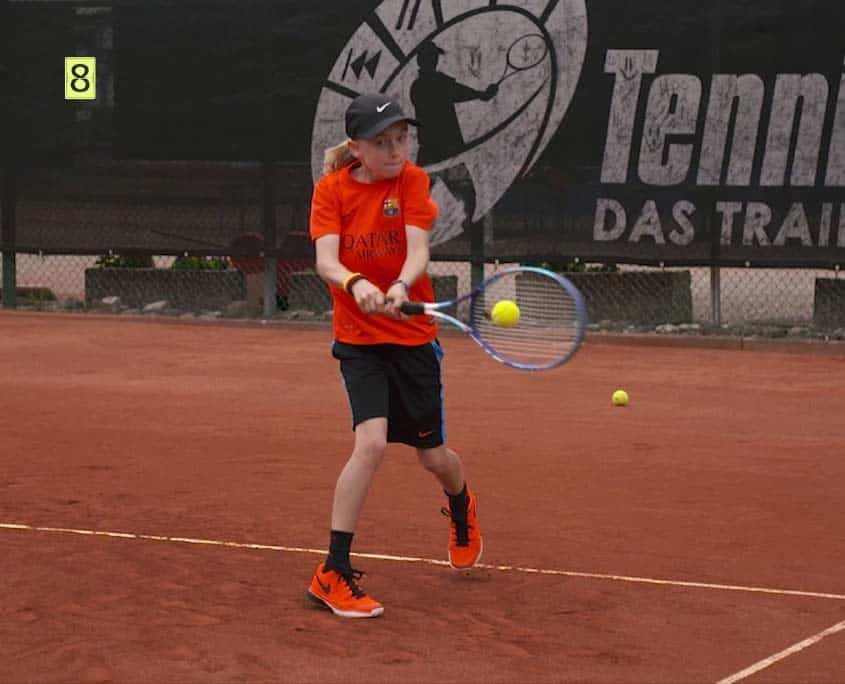
Age 11. Also here a clean contact point. However, the foot of the standing leg is still quite lateral.
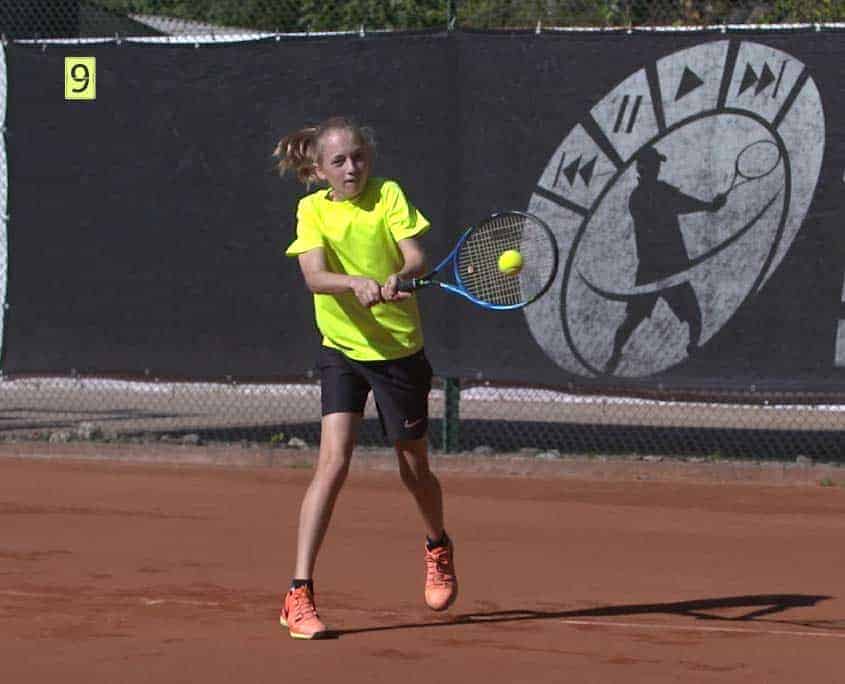
Age 13. As with the forehand, the main action shows the least differences. The variants are mostly in the supporting actions, before and after the contact point.
The Follow Through
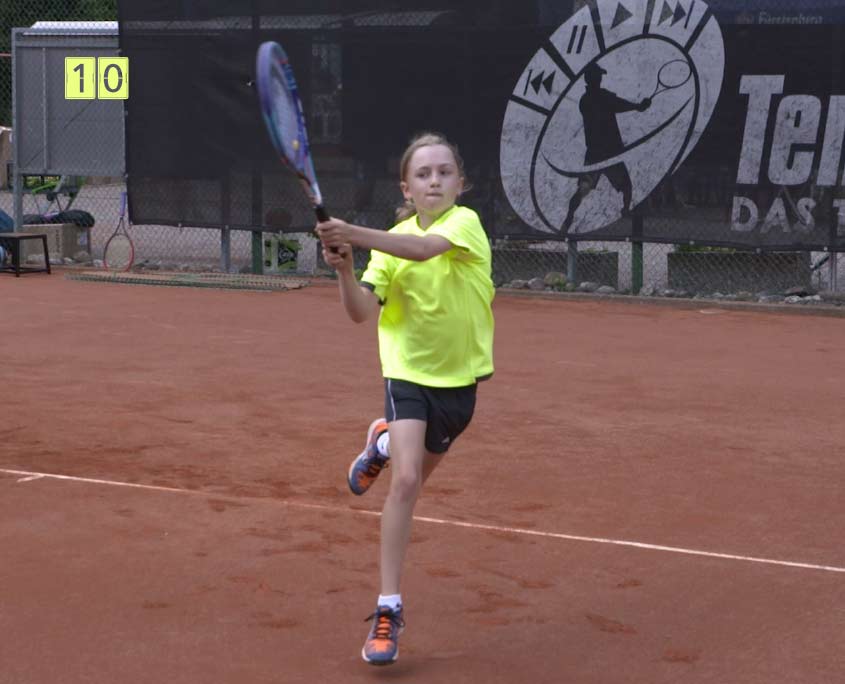
Age 10. The dominance of the left arm can be seen in the follow through. The shoulder axis rotates into the stroke, which runs over the right leg, the left one swings backwards to maintain balance.
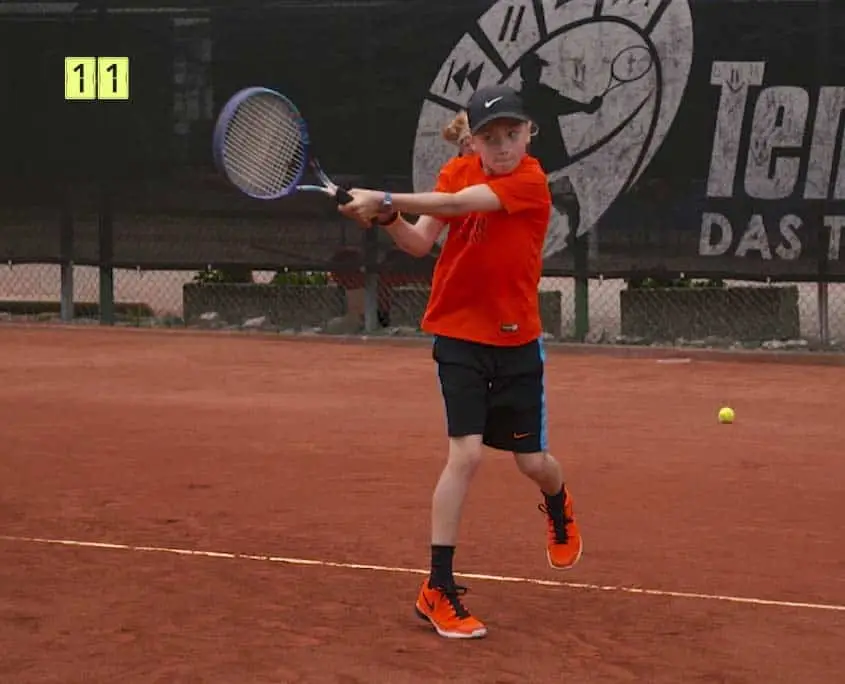
Age 11. Also here the clear upper body rotation into the ball can be seen. Although the racquet came to the ball from below and once had to assume some forward spin, the racquet and the arms are still in line. A not quite optimal swing behaviour.
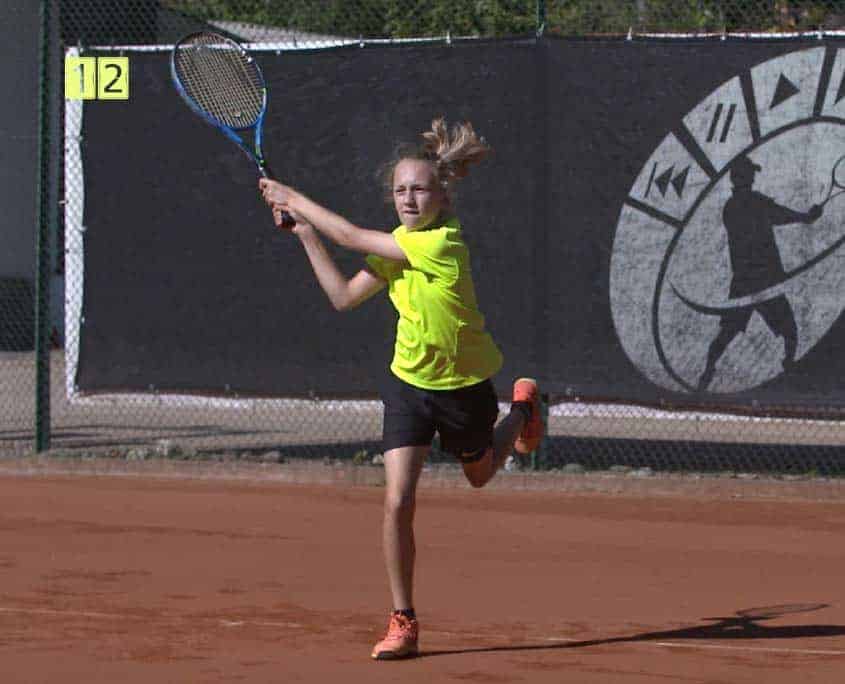
Age 13. A strong use of the left arm can also be seen here. In this phase, however, the tip of the racquet is already clearly above the wrists. The swing of the upper body is dissolved beautifully over the arms. Also here the stroke movement runs over the front right leg.
The Follow Through
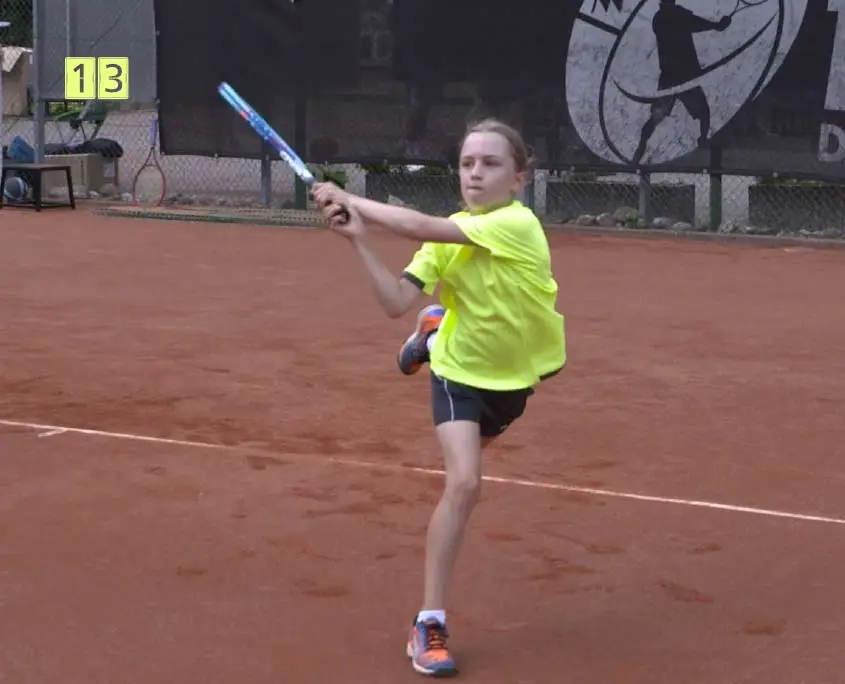
Age 10. The follow through goes towards the right shoulder. For a two-handed backhand usual, it resembles nevertheless a left-handed forehand. The stroke is fully executed over the right leg, the left leg balances out.
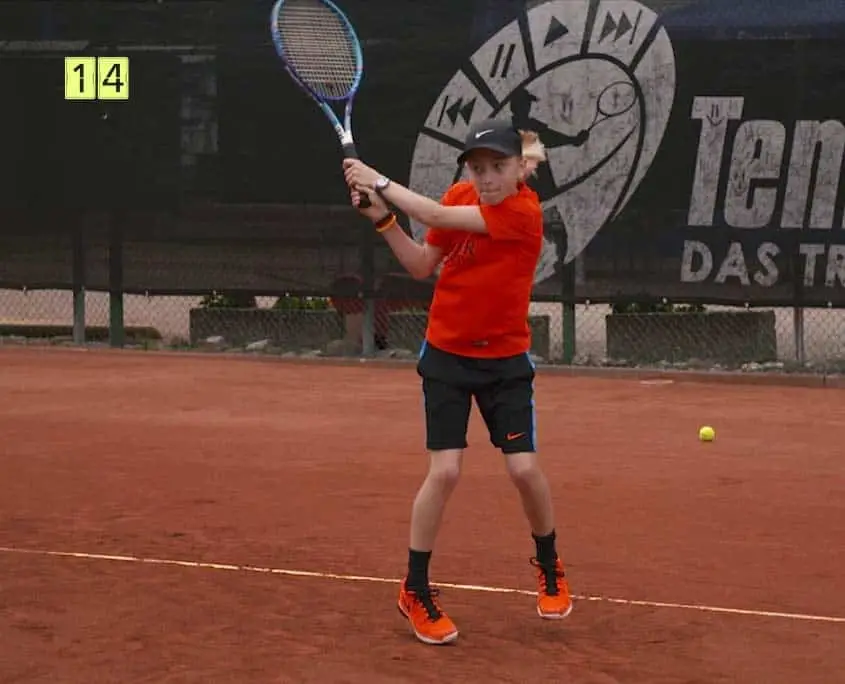
Age 11. Opposite to previous and following picture, Gina jumps at this stroke at this phase. Means: the left leg comes forward during rotation. So she can dissolve the very lateral position of her right foot before still.
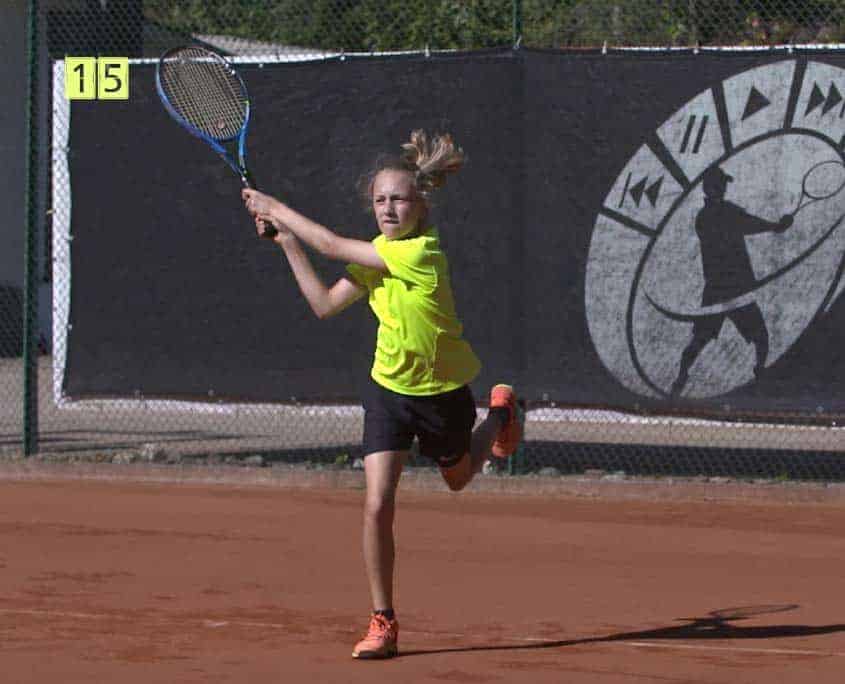
Age 13. Also here the punch runs fully over the right leg, the left leg kicks backwards. The left arm swings the racquet towards the right shoulder, the right arm is only passively involved in the shot.
Landing and Balance
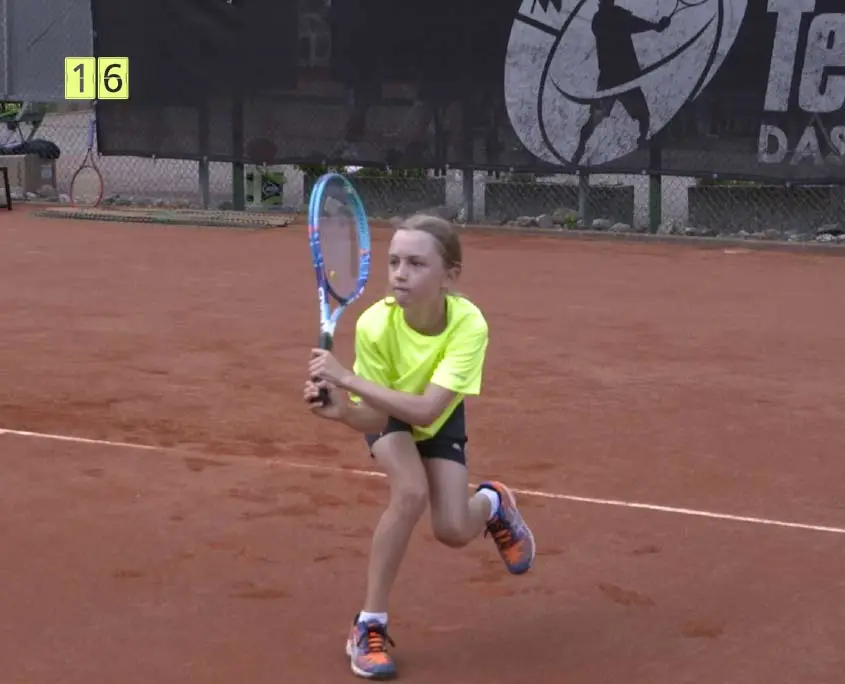
Age 10. Here you can see why the core, the trunk muscles are so important. The still very delicately built 10-year-old Gina is not yet able to absorb the energy of her stroke in a stable manner.
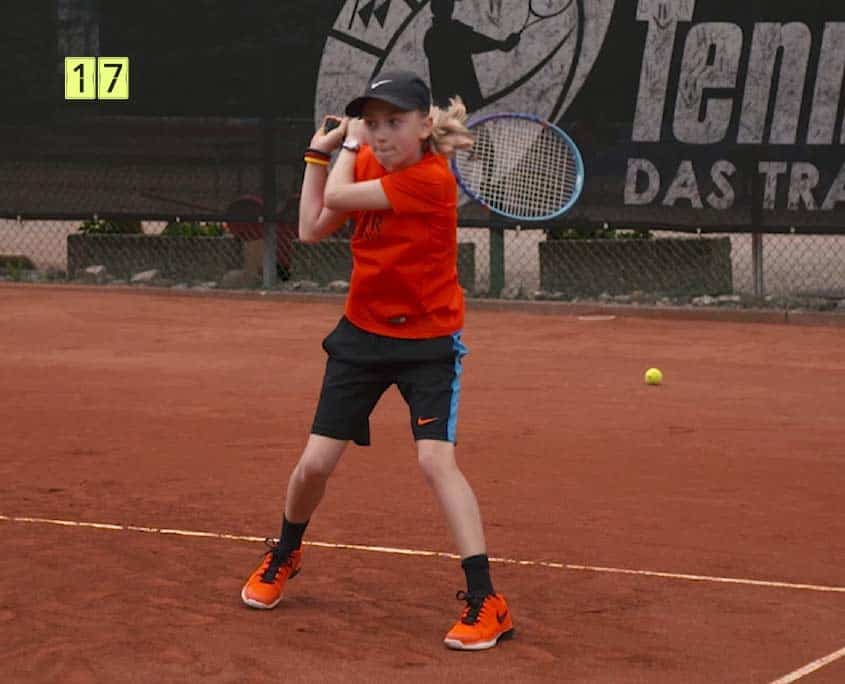
Age 11. That looks much better a year later. The torso is stable after the forward rotation and the left leg absorbs the swing by jumping around.
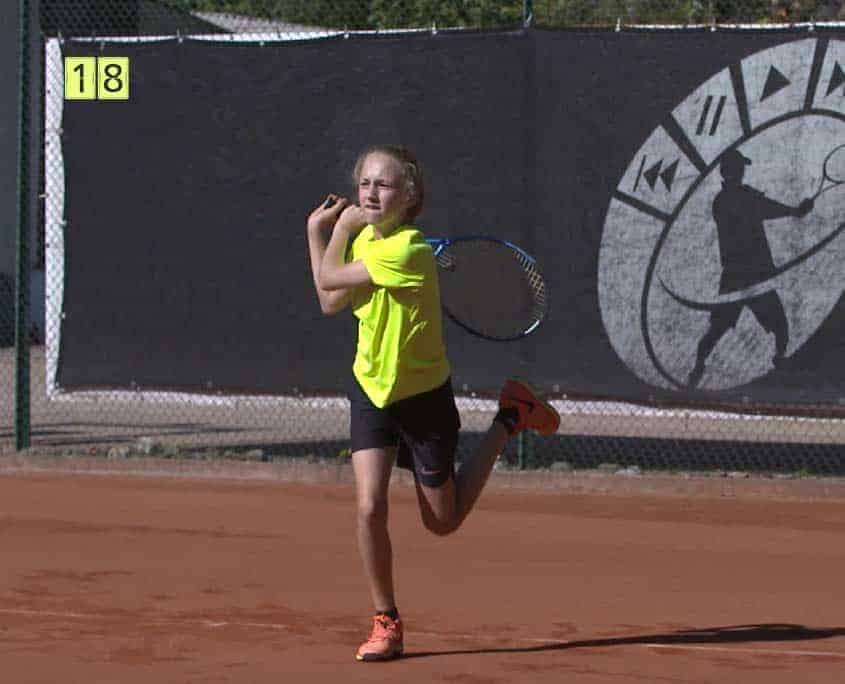
Age 13. This shot is actually similar to the one three years ago, but the significantly improved muscular situation now guarantees a balanced end of the racquet swing.