
In this technical analysis, we compare the backhand volley technique of two female players from the German women’s teams (Badenliga) born in 2000 and 2005. We analyze their differences in backswing, arm position, and compensatory movement.
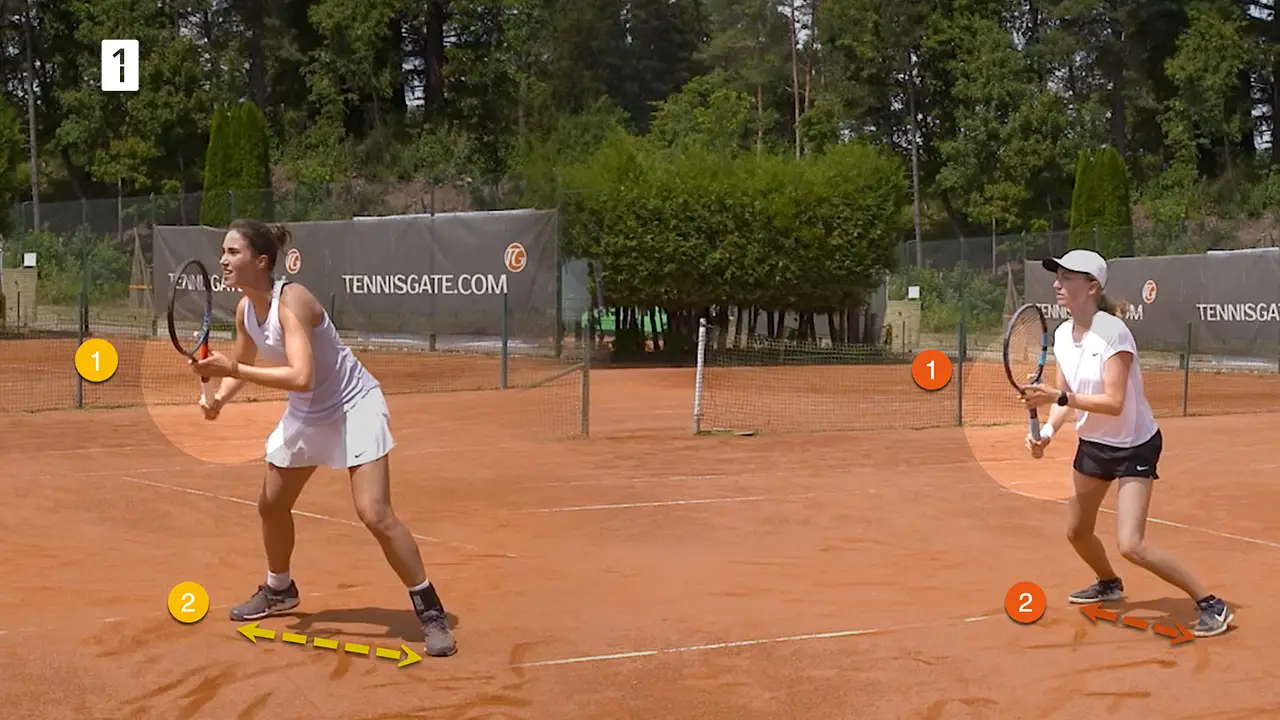
Both players use a two-handed backhand, but their volleys are classic, with their left hand at the heart of the racket in an exemplary position in front of the body. The grips are comparable (continental grip for a “softer” backhand grip). The girl on the left uses a wider stance (2). The younger player on the right tilts her feet (and knees) inward.
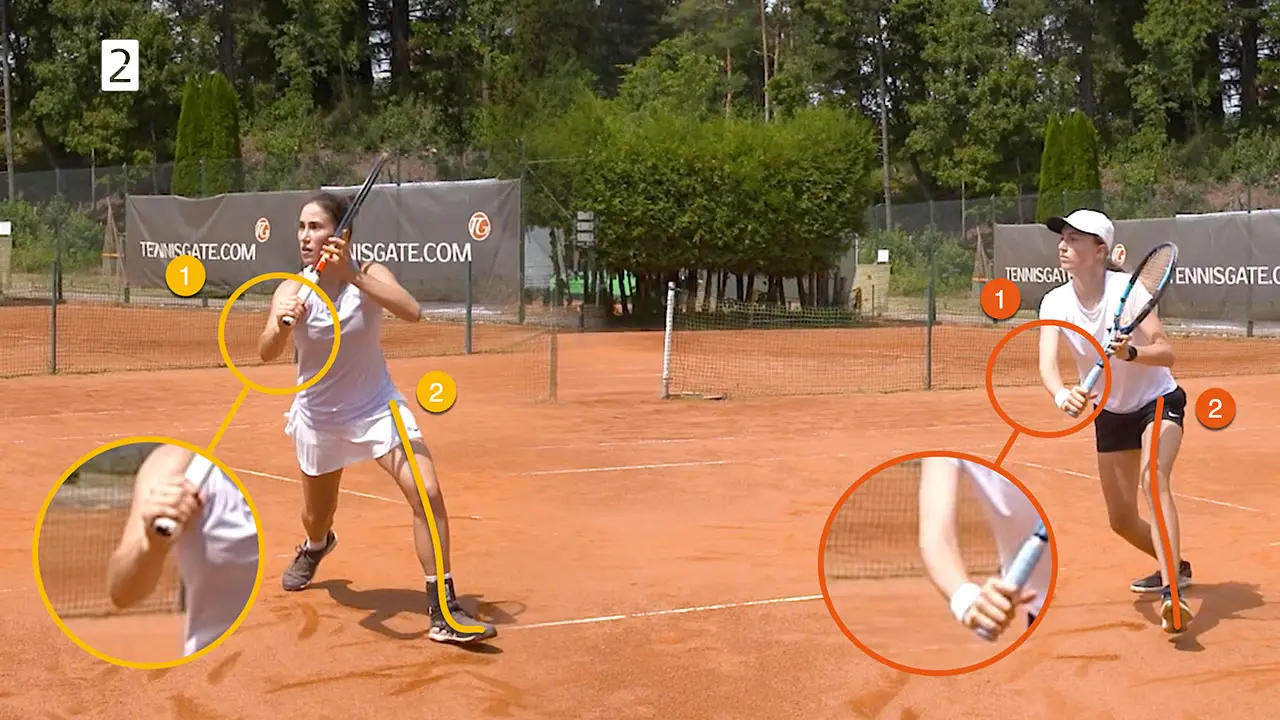
There are differences in the backswing: The player on the left sets her racquet higher on the backswing, higher than her head, while the girl on the right uses a lower backswing, about shoulder height (1). To the left, the hip is opened and the left foot is moved backwards. To the right, the foot moves diagonally forwards (2).
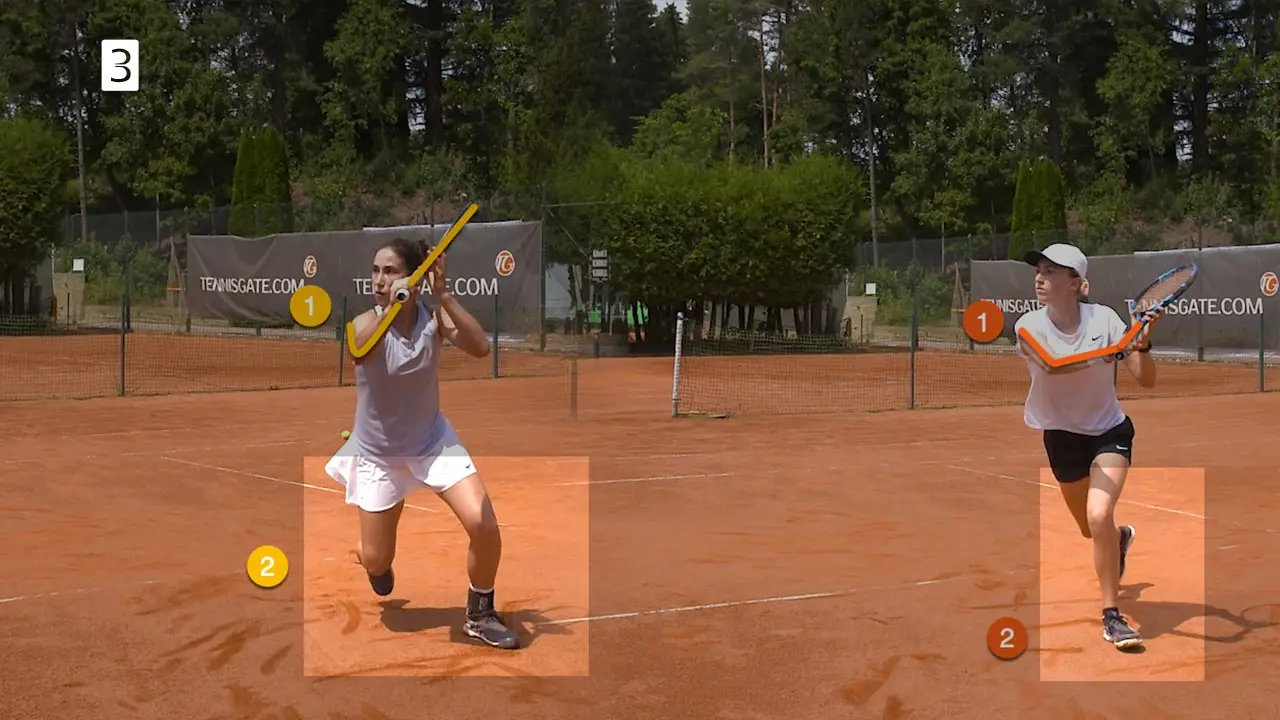
Strong differences in the backswing: the girl on the left bends her elbow strongly, while the girl on the right uses a straighter arm (1). Both shift their weight noticeably forward (2).
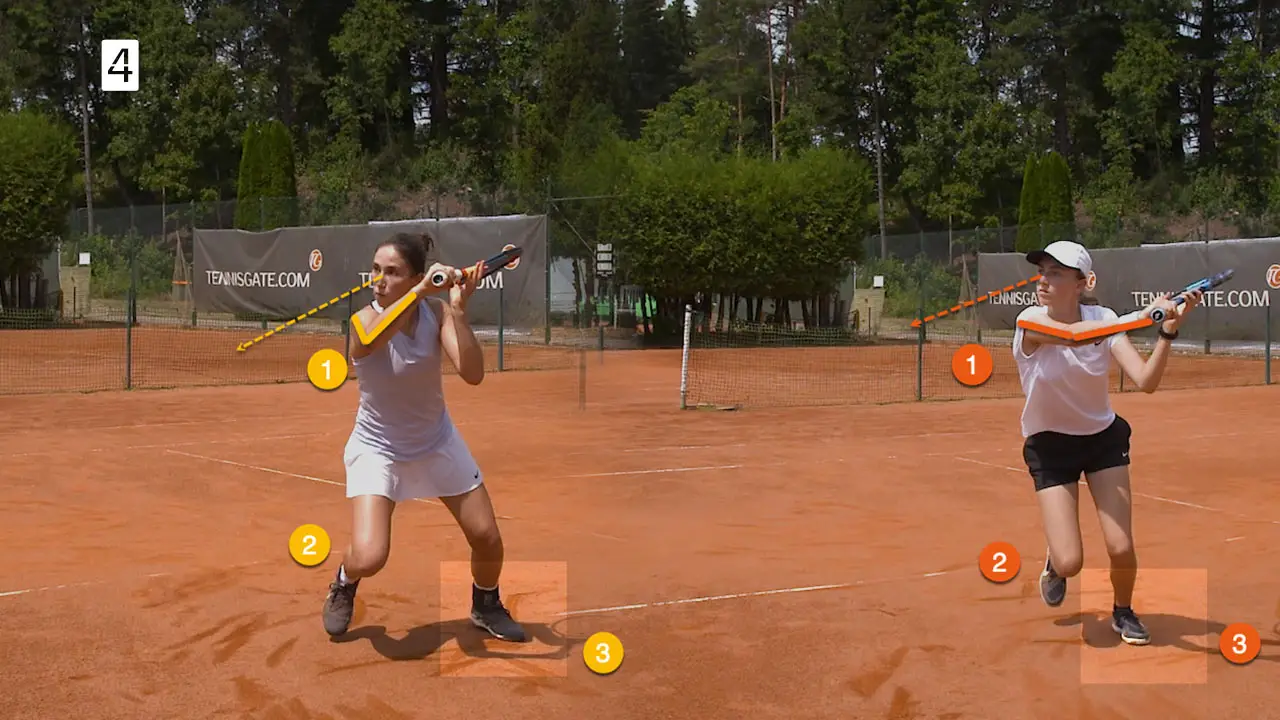
Here again, there are differences in the position of the arm at the end of the backswing. The left arm remains strongly bent on the player on the left, while the arm of the player on the right is more extended. Both hold the racket open (1), which is useful to impart slice to the volley. A more vertical racket generates more backspin. Both lift their right knee, which helps shift their weight (2). The weight is still noticeably on the left leg (3). Their eyes are focused forward on the ball.
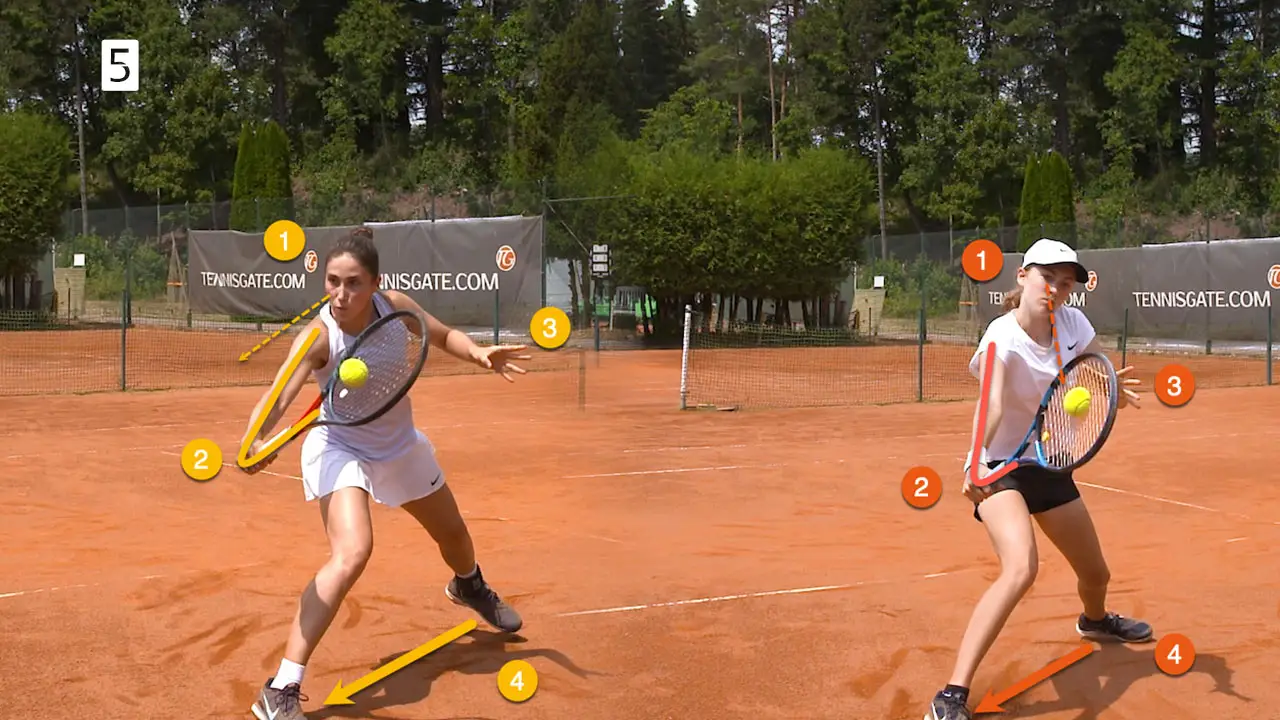
Both are hitting the ball in front of their body. Interesting: the player on the left is already looking slightly forward, while the player on the right is still focusing on the ball (1). Looking at the arm and wrist (2), it is noticeable that on the left, the racquet head is far behind the wrist at the point of contact. On the right, the racquet head is level with the wrist. This is likely due to the different arm positions during the backswing and possibly different targets. Now, let’s look at the left hand’s compensatory movement (3), which is significant for balance and counter-rotation. The player on the left pulled her left hand further back but they both do a great job. The weight has shifted to the front foot (4).
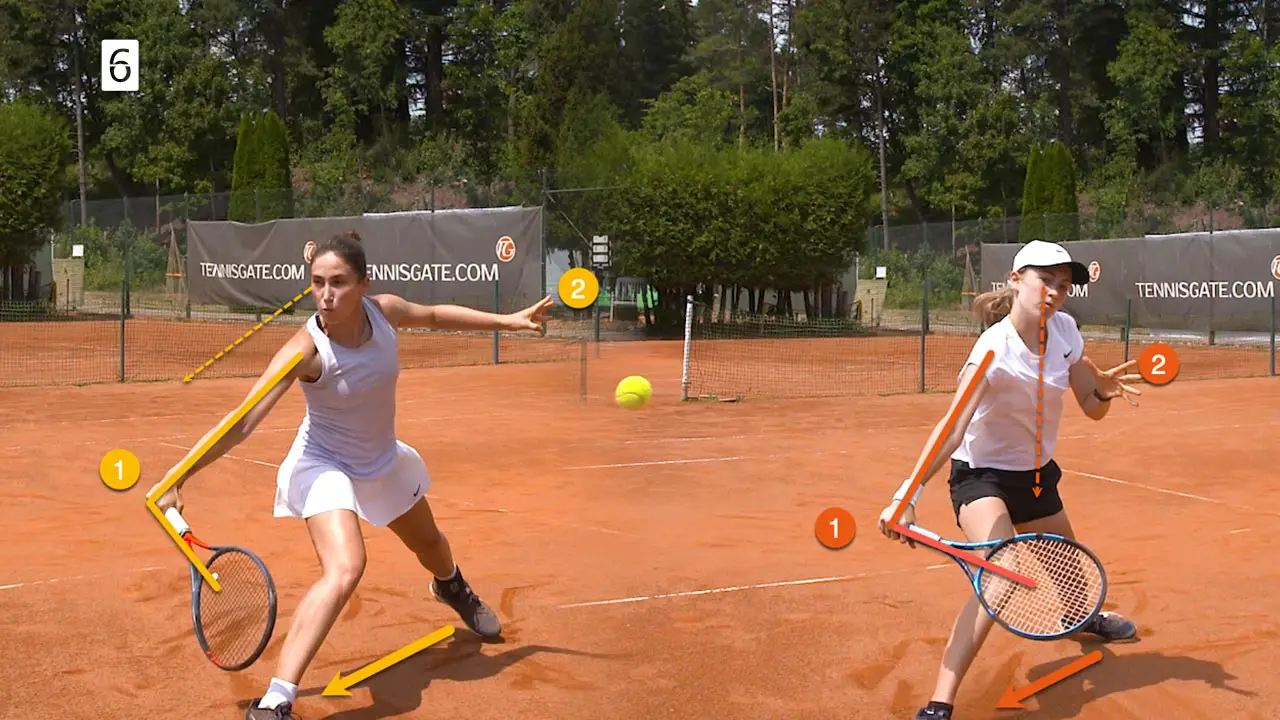
Shortly after the meeting point, the compensatory movement to the left is much more noticeable (2). Let’s focus again on the wrist and racket head position (1): Now, on the player on the left, the racket head has “caught up” and is level with the wrist. The player on the right’s racket head is slightly behind the wrist. The player still keeps her head steady.
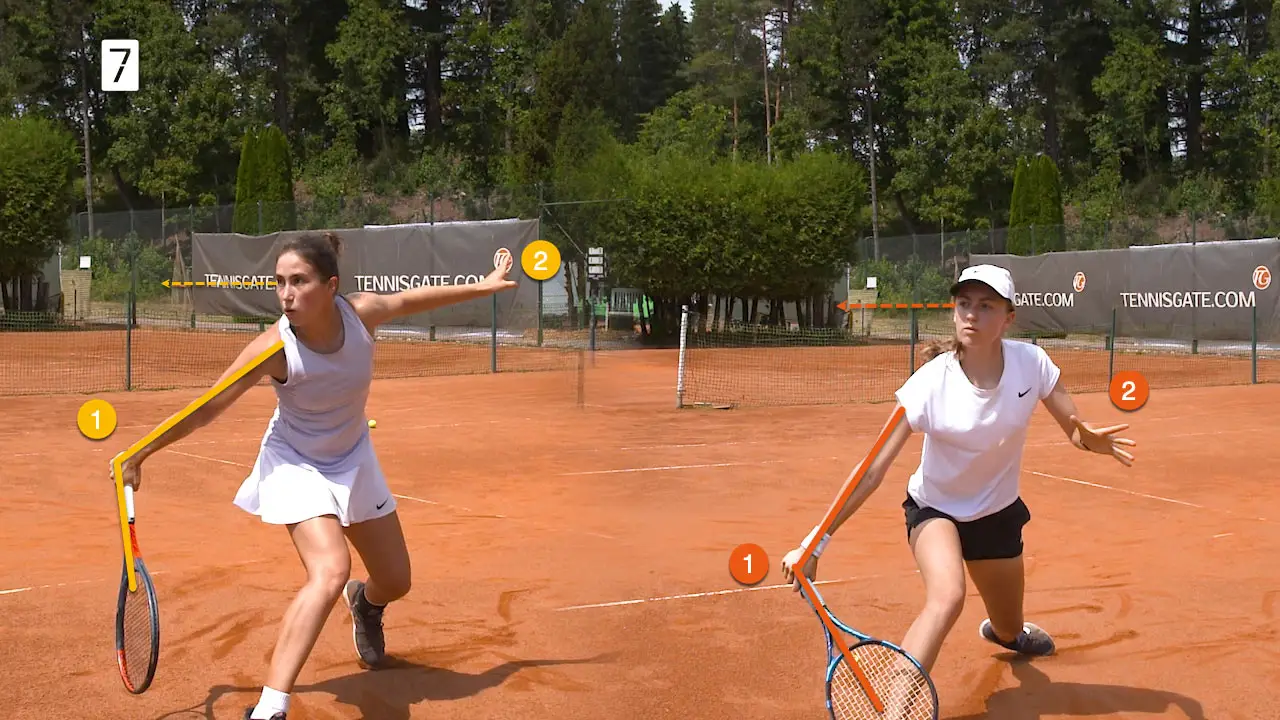
The racket of the player on the left is pointing down at the end of her swing as her arm rotates, while the player on the right maintains a more stable position (1). Both players have their left hand noticeably behind their body, which prevents the left shoulder from rotating forward during the swing. Now our player on the right is also looking forward.
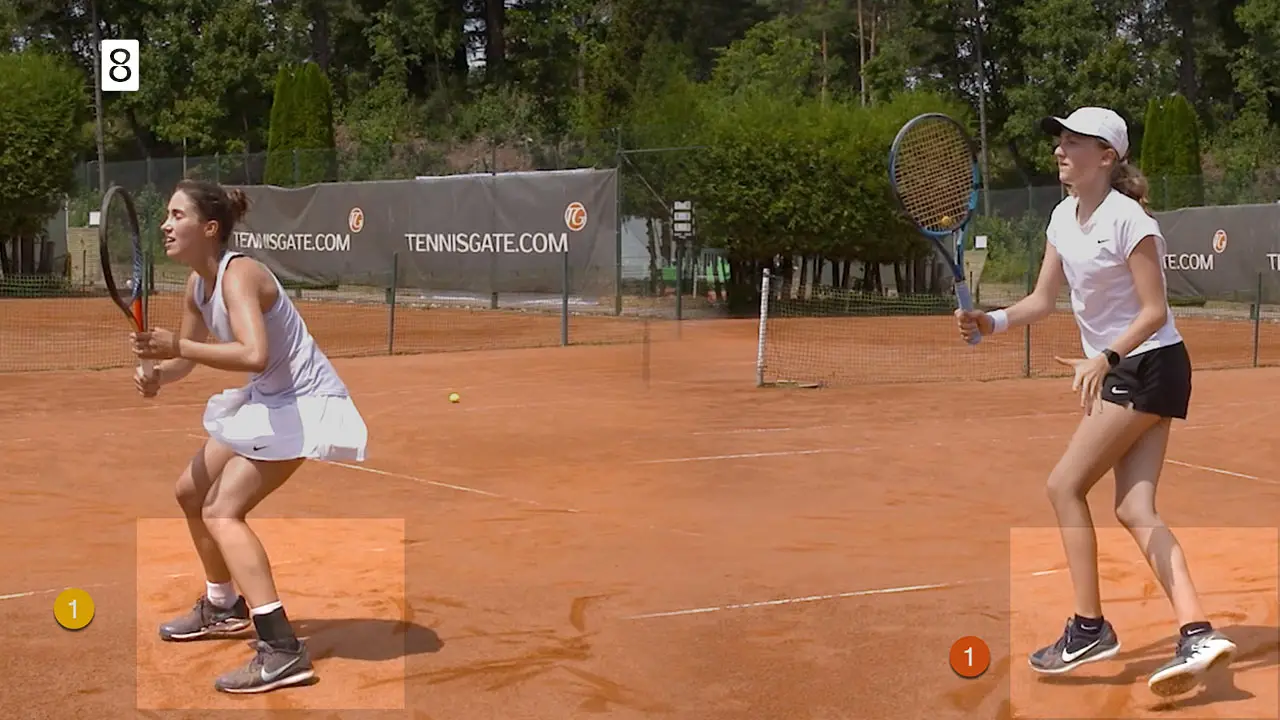
The player on the left recovers using side steps, while the player on the right uses cross over steps. Under time pressure cross over steps would be more effective.
Coaching Keys
There are many things to copy from these players:
- The split step
- the Continental grip
- turning sideways
- using a short backswing
- stepping across the body
- the racquet head above the hand at contact
- the cocked wrist position
- the “L” shape between the arm
- and the racquet and the movement towards the ball.
One of the biggest difference is the arm position on the backswing. The player on the left bends the arm quite a bit more than the player on the right. This may help the player generate a bit more power but at the same time requires better coordination. In general, it helps to minimize the movement of the racquet and the take back of the player on the right promotes this. Keeping the arm straighter helps to keep the racquet quieter. Another difference was the focus at contact.
Eyes on the ball or rotating the head with the racket? Both are represented in professional tennis. Keeping your eyes on the ball helps with focus and balance. It is highly recommended for players who tend to over rotate their shoulders during one-handed backhand strokes. However, this only works in conjunction with the counter-movement of the non-dominant arm.
Many times the head follows the racket movement calmly and smoothly. This is less pronounced in the volley than in the backhand slice, for instance. However, it is very important that the head stays still and that the ball remain field of view at the point of impact, so that the ball can be focused on. In reality, the ball cannot be seen at the point of impact. However, trying to do so is the best way to center the ball in the racquet.